On 8 January 2011, a seismograph near Seattle recorded a small earthquake. It was caused by football fans. It makes a great story, but the science of crowds gets far more interesting when you stop looking at the ground and start looking at the referee.
The Beast Quake
Marshawn Lynch’s famous touchdown run for the Seattle Seahawks sent fans leaping, and a nearby seismometer on the Pacific Northwest Seismic Network picked it up. The signal matched an earthquake of about magnitude 2. It did no damage, and the play has been the Beast Quake ever since, after Lynch’s nickname.
In July 2023, two Taylor Swift concerts at the same stadium beat it. Seismologist Jackie Caplan-Auerbach of Western Washington University recorded the equivalent of magnitude 2.3, about twice the shaking, and could tie some peaks to specific songs. A crowd jumping to one tempo gives off a regular signal that is easier to detect than a sudden burst of joy.
You can find a goal in the seismic data
In 2017, a team from the Jaume Almera Institute of Earth Sciences in Barcelona published a study of a seismometer placed in the city to get the public interested in seismology. It picked up traffic, the metro, concerts, fireworks and football.
Each source had a recognisable signature, and a goal at the stadium could be spotted in the data. It is a lovely curiosity. The important findings are elsewhere.
Turn the sound off and referees change
In 2002, Alan Nevill, Nigel Balmer and Mark Williams showed 40 qualified referees incidents from a Premier League match, some with crowd noise and some in silence.
With the noise on, they were more hesitant and gave about 15.5% fewer fouls against the home team. They probably had no idea they were doing it.
The experiment nobody would have dared to run
The 2020 pandemic gave researchers something they could never have arranged: whole leagues played with crowds and then without. Dan McCarrick and colleagues compared 4,844 matches across 15 European leagues in 11 countries.
Without fans, home advantage fell clearly, in goals and in points. Home teams created fewer chances. Referee bias shrank as well: away sides still got more fouls and yellow cards, but by a smaller margin, and the effect on red cards vanished.
So how much are fans worth?
Crowds seem to work in two ways. They drive their team forward and they nudge the referee a little. Neither explains all of home advantage, which also comes from travel, familiarity with the ground and other things.
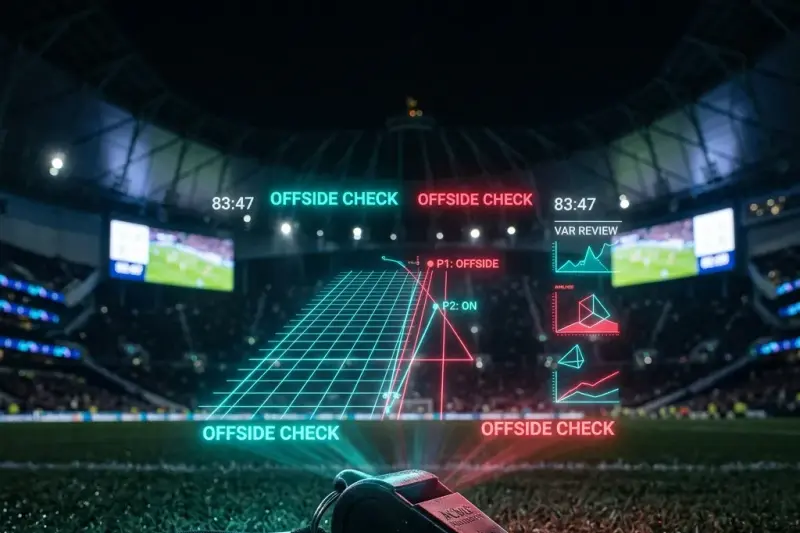
VAR may have taken away some of the bias, since a few decisions are now reviewed in calm, away from the noise. But most calls in a match, the ordinary fouls in midfield, never go near a screen.
What cannot be engineered
Some clubs now measure noise for safety and comfort, and vibration sensors watch over stand structures in older stadiums to check they can take rhythmic jumping.
No algorithm can make a stadium sing, though. Anyone who watched football in 2020 remembers how strange it felt, and the data now confirm what the empty seats suggested: fans help win matches.
Key takeaway
Supporters shake the ground, and the referees a little. The empty stadiums of 2020 showed that they really do help their team win.
Frequently asked questions
Can supporters cause an earthquake?
They produce vibrations picked up by seismometers, equivalent to earthquakes of about magnitude 2, with no danger.
What is the Beast Quake?
The seismic signal recorded in Seattle in January 2011 after a Marshawn Lynch touchdown, at about magnitude 2.
Does crowd noise influence referees?
In a 2002 experiment, referees exposed to noise called about 15.5% fewer fouls against the home team.
Did home advantage disappear during empty-stadium matches?
It fell clearly in 15 European leagues, without disappearing completely.
Does VAR correct this bias?
Partly, for decisions reviewed on video. Most ordinary fouls do not go through VAR.
Sources and method
This article draws on 3 sources, listed below. References checked in October 2026. Artificial intelligence tools help with research and writing: our method explains how. Found a mistake? Let us know and we will correct it and say so on the page. This article is for information and does not replace the advice of a doctor or sports professional who knows your situation.
- Díaz et al. (2017), urban seismology in Barcelona, traffic, concerts and matches (Scientific Reports)
- Nevill et al. (2002), crowd noise and referee decisions (Psychology of Sport and Exercise)
- McCarrick et al. (2021), home advantage without crowds, 4,844 European matches (Psychology of Sport and Exercise)