The ATP Finals start on Sunday, November 15, in Turin, with the season’s eight best players. The two-time defending champion, Jannik Sinner, is missing with a knee injury. France, on the other hand, has Arthur Fils, its first qualifier since Gaël Monfils in 2016. The event is also a technology showcase. There are no line judges on court anymore, and part of the stats now runs through AI tools. That alone makes it worth a closer look.
The field: Alcaraz favored, Sinner out
Alexander Zverev arrives as world No. 1, already sure to finish the year there. He won this event in 2018 in London and in 2021 in Turin, and he is chasing a third title. Carlos Alcaraz, 23, is the natural favorite: 42 wins and 5 losses this season, a nine-match winning streak, and titles in Vienna and at the Paris Masters. He lost last year’s Turin final to Sinner.
Sinner, champion in 2024 and 2025, qualified but will not play because of a knee injury. Daniil Medvedev, the 2020 winner, and Ben Shelton round out the top of the draw. Four players are making their debut: Arthur Fils, Spain’s Rafael Jodar, 20, Italy’s Flavio Cobolli, a Roland Garros finalist, and American Frances Tiafoe.
Arthur Fils, ten years after Monfils
At 22, Arthur Fils is the first Frenchman to qualify for the ATP Finals since Gaël Monfils in 2016. He reached a career-high No. 7 this season. He is in the John McEnroe Group with Zverev and Jodar, and opens on Sunday night against Ben Shelton.
The format gives newcomers a real chance. Each player has three round-robin matches, and the top two in each group reach the semifinals. Sometimes a single win is enough to stay alive until the last day. Shelton is still looking for his first win at the event after going 0-3 last year.
A court with no line judges
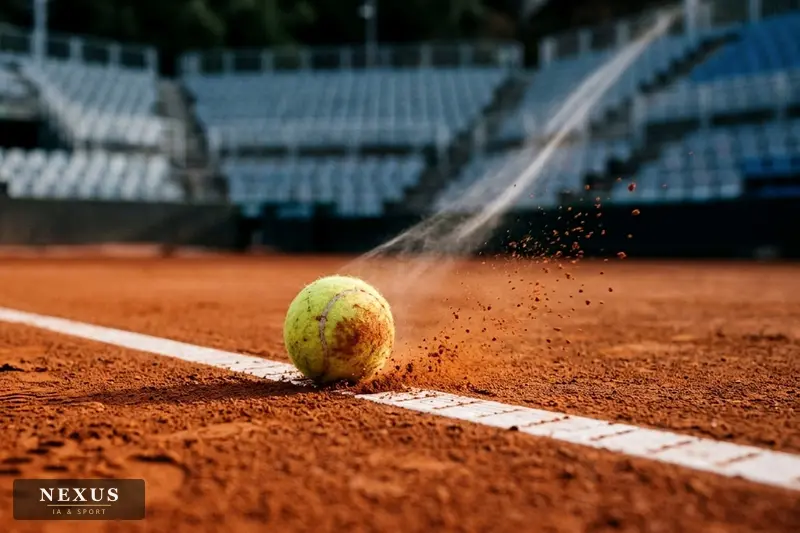
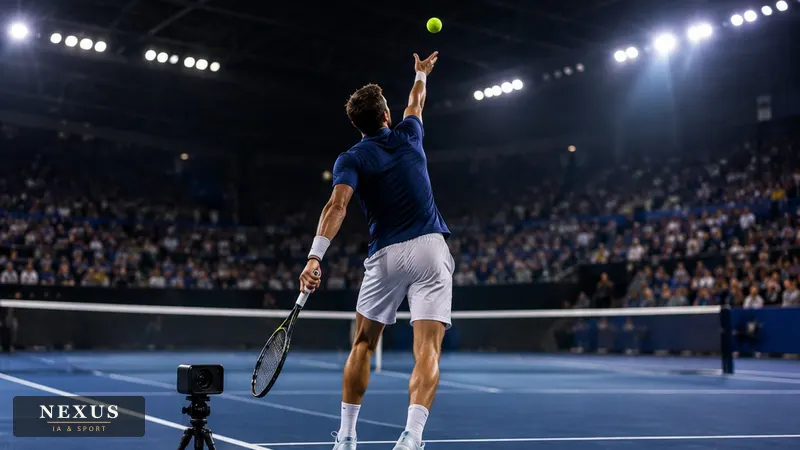
In Turin, nobody shouts “out.” Calls are made live by Hawk-Eye Live, a camera system that tracks the ball and announces the call itself with a recorded voice. The only officials left on court are the chair umpire and the ball kids.
The system was first tested in 2017 at the Next Gen ATP Finals in Milan. The Australian Open and US Open have used it on every court since 2021, and the ATP rolled it out to all its tournaments in 2025. There are no more challenges, since the machine has already decided. We covered the same shift at Roland Garros, the last Grand Slam to keep human line judges.
Stats, increasingly written by AI
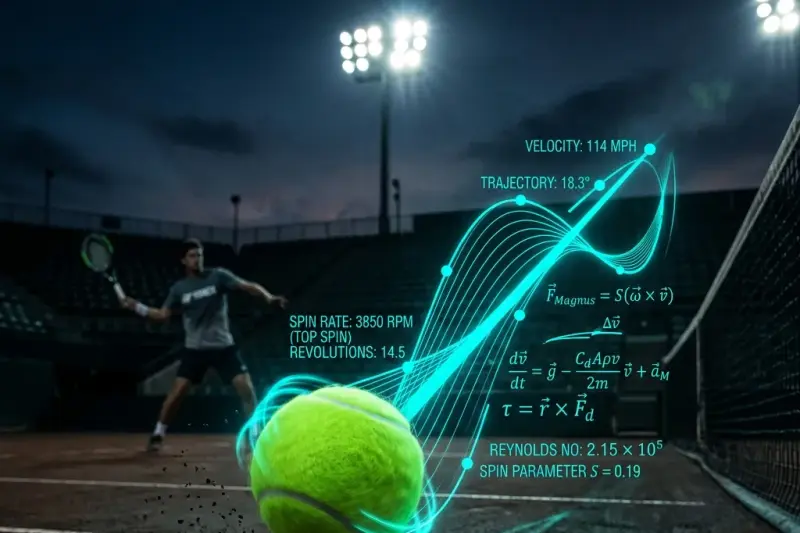
Most of the numbers you see during matches come from Infosys, the ATP’s digital partner through 2028. In January 2026 the company launched Ally, a chatbot built into the ATP stats page that answers fans’ questions about a match, a draw or a head-to-head.
It is handy, but keep a critical eye. These tools rephrase data that has already been collected, such as serve speed or first-serve percentage. They do not see what a coach sees, for example a player switching game plans. A well-told stat is still just a stat.
NTT DATA and mental load
New this year, Japan’s NTT DATA becomes the tournament’s official AI consulting partner. In the fan village it runs a space where visitors can measure their focus and mental workload, with Formula Medicine, an Italian sports medicine company with a background in Formula 1.
Another court, presented by the Italian federation, combines physical and cognitive monitoring with computer vision to show fans some aspects of performance. It is mostly a demo for visitors. Nothing suggests the players in the draw are monitored with these tools during their matches.
Is the machine more accurate than the human eye?
To be approved by the International Tennis Federation, a system like Hawk-Eye has to pass a precise test. It is compared with very high-speed cameras filming at 2,000 frames per second. The average gap must stay under 5 millimeters across the whole court, and no single bounce may differ by more than 10 millimeters from the reference. The company claimed an average error of 3.6 millimeters in its early days and now says it is around 2.2 millimeters.
The human eye is far behind. In 2008, researcher George Mather analyzed 1,473 challenges made by 246 players at 15 ATP tournaments. Officials and players locate the bounce with an uncertainty of around 40 millimeters, and line judges make fewer mistakes than players. The errors cluster on the baselines and service lines, where the ball arrives fast and at an angle.
So the machine is not perfect, but it is roughly ten times more precise than a person. A ball called “out” by one millimeter is still a decision made inside the margin of error, and some researchers regret that the way this error is calculated is not public. For players, the consequence is concrete: challenges are gone, and with them a small tactical tool that was sometimes used to break an opponent’s rhythm.
What a week in Turin is worth
Prize money hits a record $15.75 million. An undefeated champion, who wins all three group matches, the semifinal and the final, takes home $5,171,000. That is one of the biggest checks of the season, Grand Slams included.
Rankings matter too. Each group win is worth 200 points, the semifinal 400 and the final 500, for 1,500 points for an undefeated champion. For Arthur Fils, a single win in Turin would strengthen his top-10 spot ahead of the Australian Open, where rankings decide the seeds and therefore the first-round opponents.
What is at stake for Alcaraz, Zverev and the rest
For Alexander Zverev, a third title would carry extra weight. He would become only the second reigning world No. 1 to win the event in a decade, after Sinner in 2024. At 29 he still has no Grand Slam title, and Turin is where he has done best against the very top players.
Carlos Alcaraz, for his part, has never won the ATP Finals. He is chasing a sixth title of 2026 and arrives on a nine-match winning streak that includes Vienna and Paris. Last year’s final loss to Sinner still stings, and the Italian’s absence opens the door. Daniil Medvedev, the 2020 champion in London, returns after winning a title in Almaty in late October.
The doubles event deserves a look too. Harri Heliovaara and Henry Patten, the year-end No. 1 team, are defending their title. Only three teams have managed that since 2000.
For the four first-timers, the week is also an education. Playing the best eight players in the world on three consecutive matches is unlike any other event of the season, and the round-robin format means a bad first day is not the end. Fils, Jodar, Cobolli and Tiafoe all have a real chance to leave Turin with at least one big win.
What to watch this week
On the sporting side, the matchup everyone wants is Alcaraz against Zverev, one in top form and the other the world No. 1. For France, it all starts on Sunday: beating Shelton would open a path to the semifinals for Fils. The tournament ends on Sunday, November 22.
On the tech side, the most interesting thing is not on the giant screens. It is the complete absence of arguments over close calls, which changes the rhythm of matches and how players handle frustration. We will update this article with the results.
Key takeaway
In Turin, technology does not play for the players, but it has replaced the line judges and writes part of the stats. For French fans, it all starts on Sunday with Fils against Shelton.
Frequently asked questions
When are the 2026 ATP Finals?
November 15 to 22, 2026, at the Inalpi Arena in Turin, Italy.
Why is Jannik Sinner not playing?
He qualified but withdrew with a knee injury. He won the 2024 and 2025 editions.
When does Arthur Fils play?
On Sunday night, November 15, against Ben Shelton. He is in the John McEnroe Group with Alexander Zverev and Rafael Jodar.
Are there line judges at the ATP Finals?
No. Calls are made live by the Hawk-Eye Live system. Only the chair umpire and the ball kids remain on court.
What is Ally?
A chatbot launched by Infosys and the ATP in January 2026. It answers fans’ questions about stats, draws and matches.
Sources and method
This article draws on 10 sources, listed below. References checked in November 2026. Artificial intelligence tools help with research and writing: our method explains how. Found a mistake? Let us know and we will correct it and say so on the page. This article is for information and does not replace the advice of a doctor or sports professional who knows your situation.
- ATP Tour (November 2026), the eight qualifiers for the 2026 Nitto ATP Finals
- ATP Tour (November 2026), player preview and groups
- NTT DATA (November 12, 2026), official AI consulting partner of the Nitto ATP Finals
- Infosys (January 2026), launch of the Ally assistant and ATP partnership extended through 2028
- theScore (2017), the ATP tests fully electronic line calling at the Next Gen ATP Finals
- ESPN (2021), the US Open moves to Hawk-Eye Live on every court
- SVG Europe (2024), Wimbledon adopts electronic line calling for 2025
- ATP Tour (November 2026), prize money for the 2026 Nitto ATP Finals
- Mather (2008), perceptual uncertainty and line-call challenges in professional tennis (Proceedings of the Royal Society B)
- Cosmos Magazine, how Hawk-Eye works and what its margin of error is