At Wimbledon the voice calling “out” is now a recording. In Melbourne and New York too. Only in Paris do people still call the lines, and only there does the umpire climb down to inspect a mark in the clay. In June 2026 that tradition collided with a television replay, and the argument it set off goes far beyond tennis.
Everyone else has moved on
The Australian Open and US Open have used electronic calling since the early 2020s. Wimbledon gave up its line judges in 2025, and the men’s ATP tour extended it to its tournaments from that year, clay included.
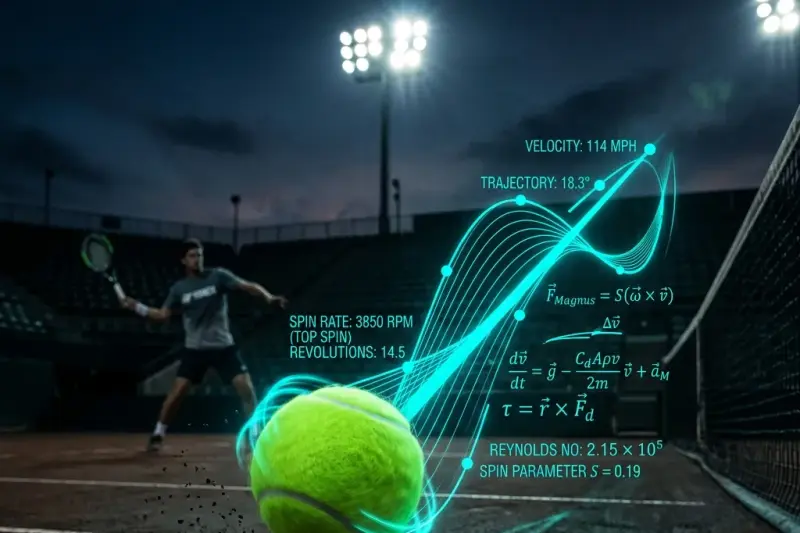
Hawk-Eye, the best-known system, uses several high-speed cameras to rebuild the ball’s path. In live mode it calls faults on its own.
The case for the mark in the clay
In September 2025 the French Tennis Federation confirmed that line judges would stay for 2026, presenting it as a way of showcasing French officiating.
Clay gives them an argument nobody else has. The ball leaves a mark, and when a player disputes a call the umpire comes down to look. Officials have also said in the past that the uneven surface makes electronic tracking less accurate than on hard courts, since the ball can slide and the line can shift slightly during rallies. That is disputed, given that ATP clay events now use the system. Players themselves are split between wanting uniformity and trusting a mark they can see.
Fonseca, Ruud and the replay
It boiled over at the 2026 tournament, in a match between João Fonseca and Casper Ruud. The umpire inspected a mark and called a ball from the Brazilian good. The electronic reconstruction on TV had it out.
Tournament director Amélie Mauresmo defended her officials, saying the machine was not 100% reliable and that the tournament kept its faith in people. She also said officiating policy would be reviewed in the annual debrief.
How good is the machine?
In 2008, the International Tennis Federation measured Hawk-Eye’s average error at 3.6 millimetres, inside its 5-millimetre limit for approval. The maker now claims around 2 millimetres.
An average hides the close calls. On a ball touching the line by a few millimetres the system can be wrong, and it still shows a crisp image that looks like certainty. That false confidence is the French federation’s point.
People are not exactly perfect
Line judges miss things too, and more often than cameras on fast balls. That is why video challenges came in during the 2000s, before replacing judges altogether elsewhere.
A mark can be confused with an old one or misread. The 2026 incident showed that neither method settles every case.
The real question
Would you rather have a machine that is right more often but cannot be questioned, or a person who errs more but can explain themselves? Football with VAR, cricket and baseball are all asking the same thing.
Paris has picked the person, for now. The decision will be looked at again. Whatever happens, it has shown that officiating is about more than accuracy. People also have to believe it.
Key takeaway
Neither the camera nor the mark in the clay is perfect. Roland-Garros is a reminder that officiating also depends on trust.
Frequently asked questions
Does Roland-Garros use Hawk-Eye?
Not for official calls in 2026. These are made by line judges, and the chair umpire checks the mark on the ground if a call is disputed.
Is Hawk-Eye accurate?
The average error measured in 2008 was 3.6 millimetres, below the 5-millimetre limit set by the International Tennis Federation. The manufacturer claims better today.
Why keep judges on clay?
The ball leaves a visible mark there, and the tournament considers that the uneven surface makes electronic tracking less certain.
Do the other Grand Slams still have line judges?
No. The Australian Open, the US Open and, since 2025, Wimbledon use electronic line calling.
Could the decision change?
Yes. After the June 2026 incident, the tournament director announced a review in the annual debrief.
Sources and method
This article draws on 3 sources, listed below. References checked in October 2026. Artificial intelligence tools help with research and writing: our method explains how. Found a mistake? Let us know and we will correct it and say so on the page. This article is for information and does not replace the advice of a doctor or sports professional who knows your situation.