A week ago, Jensen Huang was the most powerful man in artificial intelligence. On November 12 he left NVIDIA, the company he co-founded 33 years earlier. In five days he admitted cheating on his wife, watched the American press link one of his affairs to a businesswoman whom US intelligence reportedly suspects of spying for China, and lost the confidence of his board. Here is what we know and what remains unproven. Sports fans have a reason to follow this too: a large share of the AI that analyzes games runs on NVIDIA chips.
Five days from confession to resignation
It started with an internal message on Sunday, November 8. Writing to employees, Jensen Huang said: “I was unfaithful to my wife.” He said he had hurt his wife and children and had fallen short of his responsibilities to the company and its shareholders. The same day, the board announced an independent investigation.
On November 10, the independent directors handed the investigation to Joon H. Kim, a former acting US attorney, and the law firm Wachtell, Lipton, Rosen & Katz. On the 11th, The New York Times reported a second affair, this time with an NVIDIA vice president in charge of health care. Reuters later reported a relationship with another employee, without naming her.
That second report is what turned the board, according to a source quoted by CNBC. Directors met on Wednesday night. On Thursday, November 12, NVIDIA announced that Jensen Huang was stepping down as president, CEO and board member, effective immediately. Colette Kress, CFO since 2013, became interim CEO while keeping her finance role. Harvey Jones, a director since 1993, became the first board chair in the company’s history.
The businesswoman and the spying suspicions
The affair that started it all involves a Chinese businesswoman, no relation to Jensen Huang despite the shared surname. She is tied to Megaspeed, a Singapore-based company that was buying advanced NVIDIA chips. That is where the story stops being private.
According to an anonymous source quoted by NBC News, US intelligence agencies concluded that she was working for China. The New York Times and the Financial Times reported that she was under US surveillance and had been recruited by China’s top intelligence agency. The concerns reportedly reached Secretary of State Marco Rubio, who declined to comment.
To be clear: no evidence has been made public. China called the allegation “unsubstantiated.” NVIDIA said it has “no reason to believe” that national security or company secrets were compromised, and Jensen Huang had described their interactions as business-related and “completely normal.” The board’s investigation and Congress will have to settle it.
Congress, Wall Street and Donald Trump
In Washington, the affair quickly turned political. House Republicans asked Jensen Huang to explain his ties to Megaspeed. According to House Foreign Affairs chair Brian Mast, he agreed to testify before Thanksgiving. Donald Trump first defended him as “a fine person” who should stay on, then called the resignation “a horrible thing.”
The stock fell as much as 13% at the open on November 12 before closing down 4.3%. The scandal deepened a slide that was already underway: six straight weekly losses, the longest streak since 2012, and roughly $1.6 trillion in market value gone since early October, driven by interest rates and doubts about AI spending. NVIDIA reports earnings on November 17, with analysts expecting close to $109 billion in quarterly revenue.
Why sports should care
You rarely see the NVIDIA name in a stadium, but its graphics chips are everywhere. They run the models that track players on video and produce replays and stats. When a club or a broadcaster talks about AI, the computing very often happens on NVIDIA hardware.
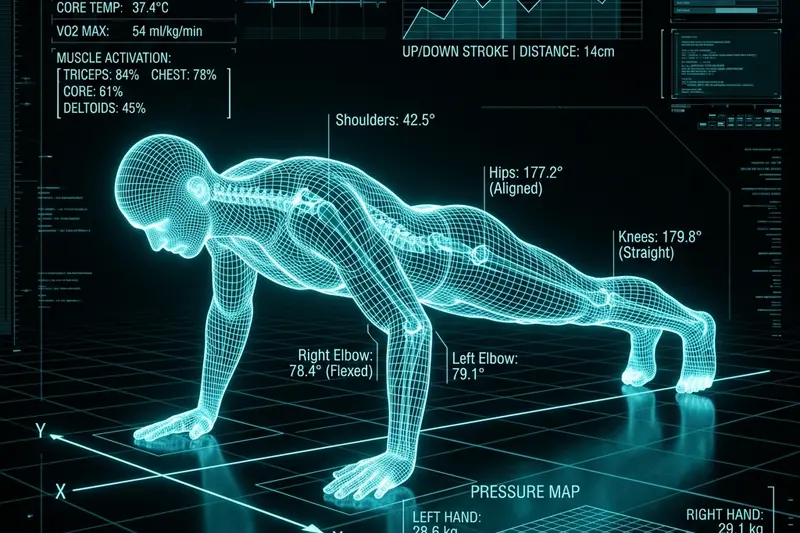
In September, at the IBC show in Amsterdam, the company introduced two tools built for sports. 3D Body Pose estimates an athlete’s joint positions and angles from a single camera, with no sensors on the body. NVIDIA lists movement tracking, biomechanics, officiating and player safety as uses. Video Frame Generation creates in-between frames to produce smooth slow motion. Ross Video is building it into its replay system, with 6x slow motion today and 8x in development.
NVIDIA also offers leagues “playbooks” to fine-tune its open models on their own game footage. On unseen clips, multiple-choice accuracy rose from about 53% to 94%, according to the company. Hawk-Eye (video officiating), Stats Perform (sports data) and startups such as Peripheral Labs and Skyrim.ai are part of this ecosystem. Neuron Systems even built an automated sports newsroom on H100 chips, generating live commentary in English, Spanish and Hindi.
What the resignation could change
In the short term, not much for a club or a broadcaster. The chips ship, the software works, and Colette Kress has no reason to cut a business that makes money. Sports is a small line for NVIDIA anyway, far behind the data centers of big tech.
Longer term, two things are worth watching. NVIDIA’s health care unit, which works on medical imaging and biology models, now has its leader named in the scandal, and its projects sit close to sports medicine. The Megaspeed case also reopens the question of chip sales to China. If Washington tightens the rules, video analysis tools sold in Asia could feel it.
Our take: an industry that depends on one supplier
More than anything, this affair shows how much sports AI rests on a handful of companies, and sometimes on one man. For years Jensen Huang embodied NVIDIA on stage, leather jacket included. His fall is a reminder that a tech supplier is still a company, with its leaders and its political risks.
For a club investing in video analysis or player tracking, the lesson is simple. Check where your footage and data are stored, who can access them, and whether you could switch providers without losing everything. The open models NVIDIA promotes help here, since they can run on your own servers. The club still has to stay in control of what goes into them.
Key takeaway
Jensen Huang is gone, but NVIDIA chips are still everywhere in sports AI. For a club, the real question is dependence on one supplier: knowing where your data goes and being able to switch providers.
Frequently asked questions
Why did Jensen Huang leave NVIDIA?
He resigned on November 12, 2026, four days after admitting infidelity. Reports of a second affair, with a company vice president, turned the board against him.
Who runs NVIDIA now?
CFO Colette Kress is interim CEO. The board is looking for a successor, inside and outside the company.
Is the woman in the affair a Chinese spy?
US media say so, citing anonymous intelligence sources, but no evidence has been made public. China denies it, and NVIDIA says it has no reason to believe its secrets were compromised.
What is the link between NVIDIA and sports?
Its chips power much of sports AI: player tracking on video, replays, stats and automated commentary. In 2026 NVIDIA launched dedicated tools such as 3D Body Pose.
Does the resignation change anything for clubs?
Not in the short term: the products are still available. The open questions concern the health care unit and chip sales to China.
When will we know more?
NVIDIA reports earnings on November 17, and Jensen Huang is due to testify before Congress before Thanksgiving.
Sources and method
This article draws on 10 sources, listed below. References checked in November 2026. Artificial intelligence tools help with research and writing: our method explains how. Found a mistake? Let us know and we will correct it and say so on the page. This article is for information and does not replace the advice of a doctor or sports professional who knows your situation.
- NVIDIA (November 12, 2026), press release “NVIDIA Announces CEO Transition”
- NVIDIA (November 8, 2026), Jensen Huang’s message to employees
- NVIDIA (November 10, 2026), statement from the independent directors on the investigation
- NBC News (November 8, 2026), internal investigation after the affair with a businesswoman suspected of spying
- CNBC (November 12, 2026), Jensen Huang resigns, live updates
- CNBC (November 13, 2026), six straight weekly losses for NVIDIA stock
- Inc. (November 2026), Congress responds after Jensen Huang’s apology
- NVIDIA (September 9, 2026), AI tools for sports and broadcast unveiled at IBC
- Ministry of Sport (October 6, 2026), NVIDIA expands its sports technology ecosystem
- NVIDIA, Neuron Systems case study: an automated sports newsroom