On November 4, The Athletic reported that World Gymnastics, the new name of the International Gymnastics Federation, was in serious talks to use artificial intelligence to score gymnasts at the Los Angeles Games, July 14 to 30, 2028. Its president, Morinari Watanabe, makes no secret of where he wants to go: “Our dream is to have no judges, only computers and AI awarding scores.” A few days earlier, at the world championships in Rotterdam, Fujitsu’s system had already knocked four tenths off two vault finalists, one of them double Olympic champion Carlos Yulo. Nothing is settled for 2028. But the question is on the table now, and it goes well beyond gymnastics.
A dream stated by the sport’s own president
Morinari Watanabe has led the federation since 2016. He showcased the Judging Support System (JSS) at the artistic gymnastics worlds in the Netherlands in October. His case fits in one line, quoted by The Athletic: “I don’t want mistakes or misjudgments.” He wants the sport to be “fair to everybody.”
According to the BBC, gymnastics officials would be “highly surprised” if AI were not used in some form in Los Angeles. Those statements should be read for what they are. These are advanced talks, not a rule that has been voted. And there is a big step between helping judges and replacing them, one that even the federation’s own technical people are not ready to take.
How Fujitsu’s system works
Fujitsu has been building the JSS with the federation since 2017. It was first used in official competition at the 2019 worlds in Stuttgart, on four apparatus: rings, pommel horse, and vault for both men and women. At the 2023 worlds in Antwerp, it covered all ten apparatus for the first time.
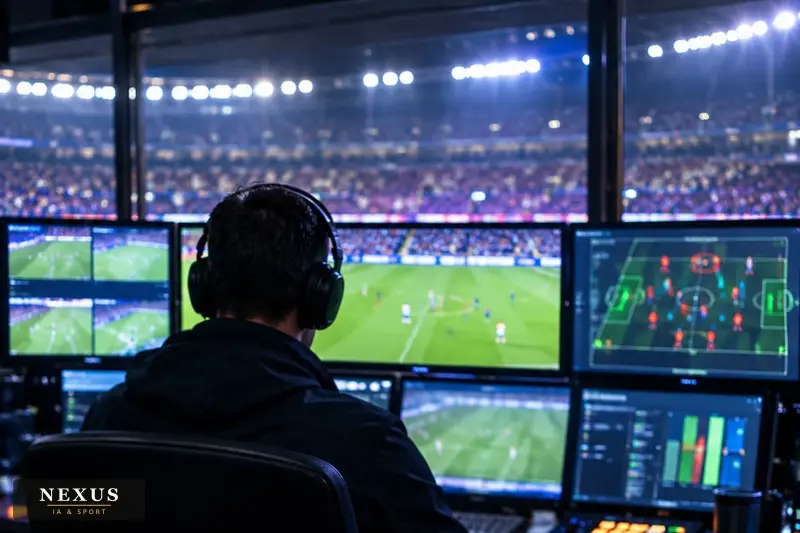
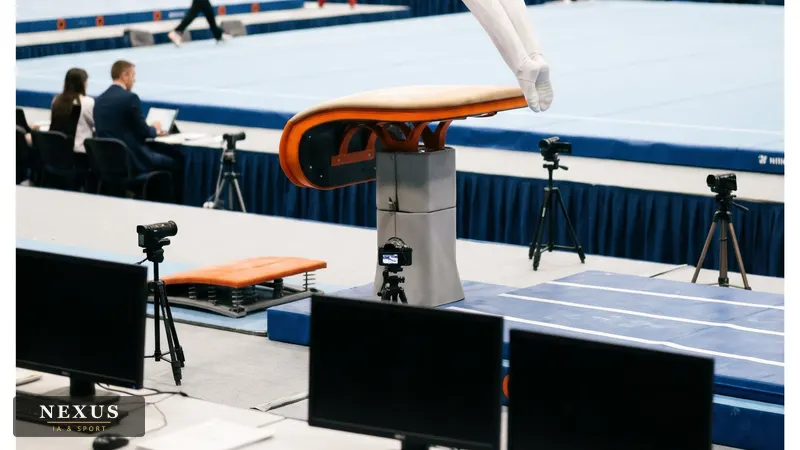
The idea is easy to describe. Four to eight high-definition cameras film each apparatus. The software rebuilds the gymnast’s skeleton, measures joint angles almost in real time and checks each skill against the Code of Points. It recognizes more than 800 elements, taking into account body position, shoulder angle and leg alignment. Judges can then replay the move in 3D from any angle.
So far, the machine does not score anyone. According to MIT Technology Review, the superior jury mainly uses it in two situations: when a coach challenges the difficulty score, or when a score is blocked because a judge and a supervisor disagree too much. In Antwerp, it pushed one gymnast’s pommel horse score up by more than three points.
Rotterdam: the vault that angered Yulo
The first real public clash came in October 2026. Carlos Yulo, the Filipino who won two golds in Paris, and Britain’s Harry Hepworth both performed the same vault, a piked Dragulescu, worth 5.6 in difficulty. In qualifying, both saw it drop to 5.2. Hepworth told the BBC that he bends his legs slightly during the half twist to set up his landing. The system read that as a tucked position, which is worth less than a pike.
In the final, Yulo tried to keep his legs fully straight and fell, finishing seventh. Hepworth came sixth and believes those four tenths cost him places. Yulo summed up his frustration in a line that went around the world: “It’s AI, I’m not a robot, we’re human beings.”
Andrew Tombs, who chairs the men’s technical committee, stands by the call. In his view, the judges would have downgraded those vaults even without the JSS, and the machine simply settled a borderline case. He still admits there are lessons to learn, especially about the exact moment the system should check leg position. Hepworth, despite his disappointment, thinks the tool can be “brilliant” once it is refined.
Why gymnastics wants machines
Human judges make mistakes, and gymnastics knows it better than most sports. Two Swiss researchers, Sandro Heiniger and Hugues Mercier, went through thousands of scores from international competitions. Their study, published in 2021 in the Journal of Quantitative Analysis in Sports, found that the vast majority of judges are fair, but that the best ones are two to three times more accurate than the worst. They also measured a national bias: some judges score gymnasts from their own country higher.
Then there are the cases nobody forgets. At the Paris Olympics, Jordan Chiles’ floor bronze came down to an inquiry her coach filed about difficulty, submitted, according to the Court of Arbitration for Sport, one minute and four seconds after the score went up instead of within the one-minute limit. CAS threw out the inquiry and the IOC gave the bronze to Romania’s Ana Barbosu. A story of seconds and tenths that ended in court. That is exactly what Watanabe wants to avoid.
What the machine cannot judge
The JSS measures angles and recognizes skills. It does not judge beauty. Steve Butcher, then an official at the FIG, put the limit plainly to MIT Technology Review: artistry is more of a feeling than something you can identify. The federation was not using the system for beam connections or floor dance elements either. Fujitsu, for its part, reported roughly 90% agreement with a human judge. That is a lot, but it still leaves about one case in ten where person and machine do not see the same thing.
The other limit is precision itself. Willem Standaert, a professor at the University of Liège quoted by The Athletic, gives the example of a leg measured at 179 degrees instead of 180. A judge would never see it, the AI always will. The Code of Points was written for human eyes, with an unwritten tolerance. Applied to the exact degree, it becomes stricter than before without anyone deciding it should. Hepworth’s vault is a good example.
Then there is transparency. In 2023, score sheets showed neither inquiries nor when the JSS had been used, and some gymnasts said they had received no explanation. If a machine takes points away, the athlete should be able to see what it measured. Butcher also acknowledged that well-funded federations, able to train with tools like this, will keep an edge.
Other sports are on the same path
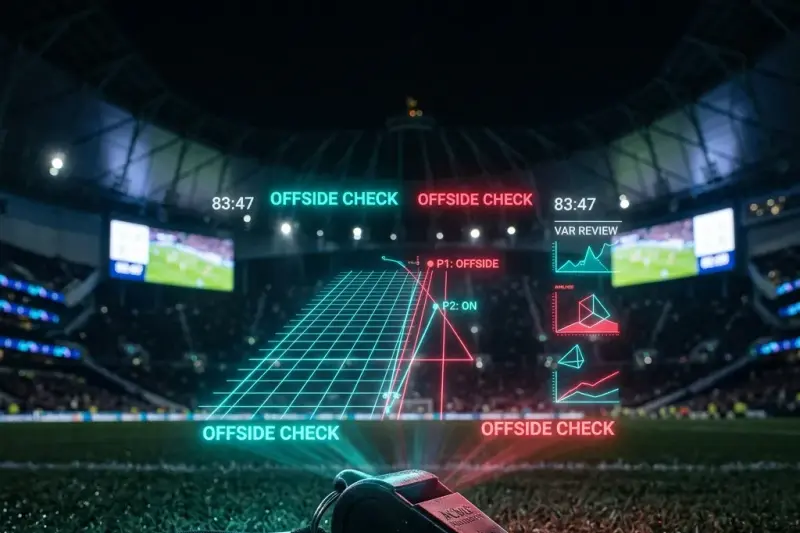
Gymnastics is not alone. Tennis has already replaced its line judges with cameras on the ATP Tour, as we saw at the ATP Finals in Turin. Football uses semi-automated offside, which measures player positions but leaves the final call to the referee.
According to the BBC, the International Ski and Snowboard Federation wants AI to judge a large share of its scored disciplines by 2029, after trials alongside human judges. Dressage is more cautious. For Ronan Murphy of the International Equestrian Federation, a machine cannot assess the harmony between horse and rider. The more a sport relies on an impression, the further away full replacement looks.
Our take: yes to AI that measures, no to an invisible judge
On difficulty, the machine has a real edge. Counting twists, measuring an angle, checking that a position is piked rather than tucked: this is exactly what computer vision does better than a tired human sitting off to the side who has a few seconds to decide. A measurement shown right away, to everyone, would also take much of the weight out of last-second inquiries like the one in Paris.
Watanabe’s “dream” goes much further than what the technology can do today. The right model looks more like semi-automated offside: the machine measures, a human decides, and everyone can see the measurement. Before letting AI weigh on a medal in Los Angeles, three things are needed: a tolerance written into the Code of Points for measurements this fine, public display of what the system saw, and a real way to appeal. Without them, a judge who can be wrong is simply swapped for a black box nobody can question.
Key takeaway
World Gymnastics wants to use Fujitsu’s AI at the 2028 Olympics, and its president dreams of getting rid of judges. The system measures angles better than a human, but it does not judge beauty and it has already cost Yulo and Hepworth points. AI that measures, yes, as long as everyone can see what it measured.
Frequently asked questions
Will AI score gymnasts at the 2028 Olympics?
It has not been decided. World Gymnastics is discussing AI-assisted judging for Los Angeles 2028, according to The Athletic. Today, Fujitsu’s system helps judges, it does not give the final score.
How does Fujitsu’s system work?
Four to eight cameras film each apparatus. The software rebuilds the gymnast’s skeleton, measures angles and checks each skill against the Code of Points. It is mainly used for inquiries or when judges disagree.
Why did Carlos Yulo criticize the AI?
In Rotterdam in October 2026, his vault was downgraded from 5.6 to 5.2 in qualifying, like Harry Hepworth’s. The system read a tucked position where the gymnasts believed they were piked.
Are human judges really biased?
Most are fair, according to a 2021 study. But the best judges are two to three times more accurate than the worst, and some show a measurable bias toward gymnasts from their own country.
Can AI judge the beauty of a routine?
No, not today. The system measures angles and recognizes skills. Artistry, beam connections and floor dance are still judged by humans.
Sources and method
This article draws on 8 sources, listed below. References checked in November 2026. Artificial intelligence tools help with research and writing: our method explains how. Found a mistake? Let us know and we will correct it and say so on the page. This article is for information and does not replace the advice of a doctor or sports professional who knows your situation.
- First for Sports via Yahoo Sports (November 13, 2026), AI-assisted judging could be coming to the LA 2028 Olympics
- BBC Sport via Hiru News (November 13, 2026), could AI help decide medals at LA28?
- MIT Technology Review (January 16, 2024), how AI helped judge the gymnastics worlds in Antwerp
- Fujitsu and the FIG (October 5, 2023), launch of the Judging Support System on all ten apparatus
- NVIDIA (October 30, 2019), an AI system helps judges at the gymnastics worlds in Stuttgart
- Heiniger and Mercier (2021), “Judging the judges: evaluating the accuracy and national bias of international gymnastics judges”, Journal of Quantitative Analysis in Sports
- NPR (August 11, 2024), CAS will not reconsider the case that took away Jordan Chiles’ bronze medal
- Inside Gymnastics (December 2025), the FIG becomes World Gymnastics