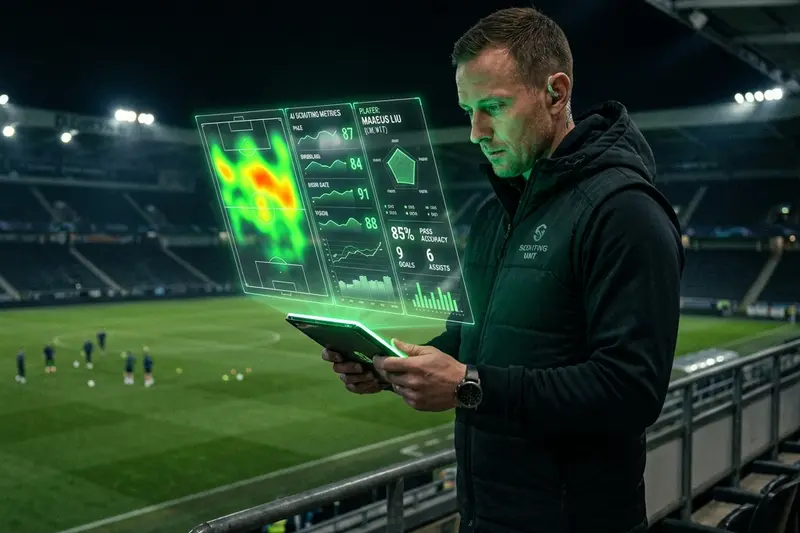
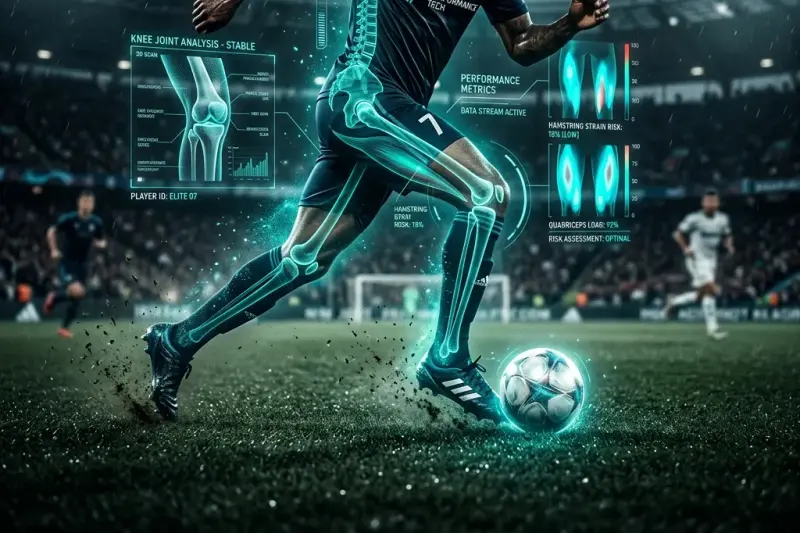
An algorithm flags a player as a risk, and the coach leaves them out. If the player asks why, what does the club say? Once software is influencing selection or a return from injury, accuracy stops being the only test. Someone has to be able to explain it, and someone has to answer for it.
Four themes, again and again
In 2025, a team led by J. H. Kim sifted through 397 publications on AI ethics in sport and kept 25. All of them came back to four concerns: fairness and bias, transparency, privacy and accountability.
Bias came up most, in fifteen studies, which makes sense. It is what touches athletes most directly.
How a neutral-looking tool can be biased
Picture a recruitment model trained on ten years of data from a club that mostly signed players from two countries. It has seen plenty of those players and few others. Faced with someone from elsewhere, it has less to go on and its predictions get worse.
Nobody meant any harm. The model simply repeats the club’s history. The way to catch it is to test the tool separately on different groups and compare its errors, write down its limits and give people a way to challenge a result. The data themselves are lopsided: in a review of 58 studies of AI in team sports, 97% of participants were male. Model quality is fragile too. A 2022 review examined 204 injury prediction models: none had been validated on data other than its own, and the authors could not recommend any for use in practice.
“The model detected a risk” is not an explanation
An opaque tool can be accurate on average and still be useless. If a coach cannot see why it advises against playing someone, they can neither trust it nor argue with it. Explanation methods can at least show which data weighed most.
It also has to make sense to the athlete. Show them that their load doubled in a week and their sleep dropped, and you are having a real conversation.
Your supplier does not carry the can
A supplier ships software, but the club makes the decision that affects the athlete. Who validates a recommendation, who sees the data and how long they are kept should all be written down before launch.
The IOC’s 2024 AI agenda makes the same point: AI should serve athletes, not the other way round.
What EU law now says
The European Union adopted its AI regulation in 2024, sorting uses by risk. Systems used to recruit people or to assess and monitor workers count as high risk, which brings duties on documentation, human oversight and data quality.
A professional athlete is often an employee, so a tool that informs contracts or rates performance can fall inside that. The regulation also bans emotion recognition at work, except for medical or safety reasons.
One page that prevents most rows
You do not need a legal department. Write down what the tool is for, who sees the results, who makes the final call, how an athlete can ask for a review and how long data are kept.
It fits on a page, and it gives players a reason to trust the tool rather than work around it. Bring them in early, too. Athletes’ commissions and unions such as FIFPRO are paying growing attention, and a player who helped set the rules is more likely to report a problem and to accept a decision they dislike.
What to ask a salesperson
What data was the model trained on? Has it been tested on people like ours? How does it measure its errors, and are they the same across groups of players?
Then ask who owns the data you supply, and whether they will improve the product for other customers. A supplier who will not answer has told you something already.
Key takeaway
Before buying an AI tool, a club should be able to answer one question: if it gets something wrong, who notices and who fixes it?
Frequently asked questions
Is an AI more objective than a human?
Not automatically. It depends on the data and the choices of those who designed it, and it can reproduce their biases.
Who is responsible for a bad recommendation?
The organisation using the tool. It must say in advance who validates decisions and how an error is corrected.
Does the European AI law apply to sports clubs?
For some uses, yes, particularly when a tool is used to recruit or assess salaried players. The level of obligation depends on the use.
Can an athlete refuse a decision made with the help of AI?
They should at least be able to ask for an explanation and a human review. That is good practice, and sometimes a legal obligation.
How can you tell whether an AI tool is biased?
By comparing its errors across different groups of players. If they are more frequent for certain profiles, the tool is biased.
What is explainable AI?
A set of methods for understanding why a model gives a result, for example by showing which data weighed most in a recommendation.
Does the IOC regulate the use of AI?
It published an Olympic AI agenda in 2024, which sets out principles. Precise rules depend mainly on federations and national laws.
Sources and method
This article draws on 4 sources, listed below. References checked in November 2026. Artificial intelligence tools help with research and writing: our method explains how. Found a mistake? Let us know and we will correct it and say so on the page. This article is for information and does not replace the advice of a doctor or sports professional who knows your situation.
- Kim et al. (2025), ethical implications of AI in sport, literature review (Journal of Sport and Health Science)
- IOC, Olympic AI agenda
- Claudino et al. (2019), AI for injury risk and performance in team sports, systematic review (Sports Medicine Open)
- Bullock et al. (2022), how good are sports injury prediction models? Systematic review (Sports Medicine)