Imagine your employer gave you a ring that tracks your sleep, then brought the results to your pay review. NBA players saw that coming years ago. In the collective agreement that took effect in 2017, they made sure the data from wearables could not follow them to the negotiating table, and the rule remains one of the clearest in sport.
Why it came up
NBA labour rules come from a collective bargaining agreement between the league and the players’ union, the NBPA. The one concluded in late 2016, in force from 2017-18, was the first to give wearables a chapter of their own.
Teams had begun handing out heart rate, sleep and load sensors, and players were worried about what might happen to the data when salaries and extensions came up.
What the agreement says
Wearing a device a team requests is voluntary, and you can say no. Devices cannot be worn in official games. Most importantly, the data cannot be used in contract negotiations or trade decisions.
A joint committee of league and union representatives reviews devices and how they are used. According to the specialist press at the time, a team breaking the rule on negotiations risked a fine of up to 250,000 dollars.
Separating health from money
Say a sensor shows months of bad sleep or slowing recovery after games. That is medically useful. It is also a reason for a team to offer a shorter or cheaper deal.
So the players drew a line. The data go to medical and performance staff and stay away from the general manager’s office. It is simple, and it deals with the main fear directly.
Cameras are treated differently
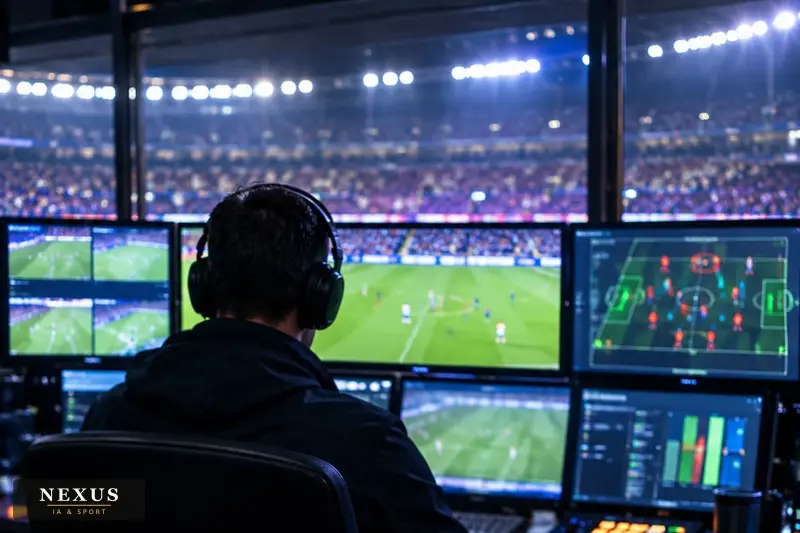
Every NBA arena has cameras tracking players and the ball several times a second. Those data are collected by the league, used for statistics and widely shared.
They describe movement rather than physiology, so they raise fewer privacy questions than heart rate or sleep.
Where it stands now
According to sources close to the union quoted by Front Office Sports in 2026, the current agreement still bars wearables in games, with no recent talks about changing that. Commissioner Adam Silver has acknowledged players’ concerns about negotiations.
Some people would love to see this data in games, on television, as other leagues have tried. Players remain wary.
A rule has its limits
A written ban cannot erase memory. An executive who has seen worrying recovery numbers will not forget them at the bargaining table. The rule governs official use, not what people keep in their heads.
That is why access matters as much as use. The fewer people see the data, the less chance it has of weighing where it should not. The league has set the principle, and teams have to live up to it.
Why other sports should copy it
The model works because it is clear. It does not call data dangerous. It says what they are for, who sees them and what they cannot be used for, with the player’s consent at the base of it all.
In many sports, and especially for amateurs and young athletes, nothing like this exists. A club can gather its players’ data with no real framework. Europe’s data protection rules apply, but they do not settle the question of using it in a negotiation.
Key takeaway
The NBA separated players’ health from their pay, and sensor data stay out of negotiations. It is a simple model other sports could copy.
Frequently asked questions
Do NBA players have to wear sensors?
No. Since the 2017 agreement, wearing a device requested by the team has been voluntary.
Can teams use these data to negotiate?
No. The agreement bans their use in contract negotiations and trade decisions.
Can you wear a sensor during an NBA game?
No, wearables remain banned during official games.
Do tracking cameras pose the same problem?
Less so. They measure positions and movement, not physiological data such as sleep or heart rate.
Does this framework exist in European football?
The European data regulation applies, but there is no rule as clear on using data in negotiations.
Sources and method
This article draws on 4 sources, listed below. References checked in October 2026. Artificial intelligence tools help with research and writing: our method explains how. Found a mistake? Let us know and we will correct it and say so on the page. This article is for information and does not replace the advice of a doctor or sports professional who knows your situation.