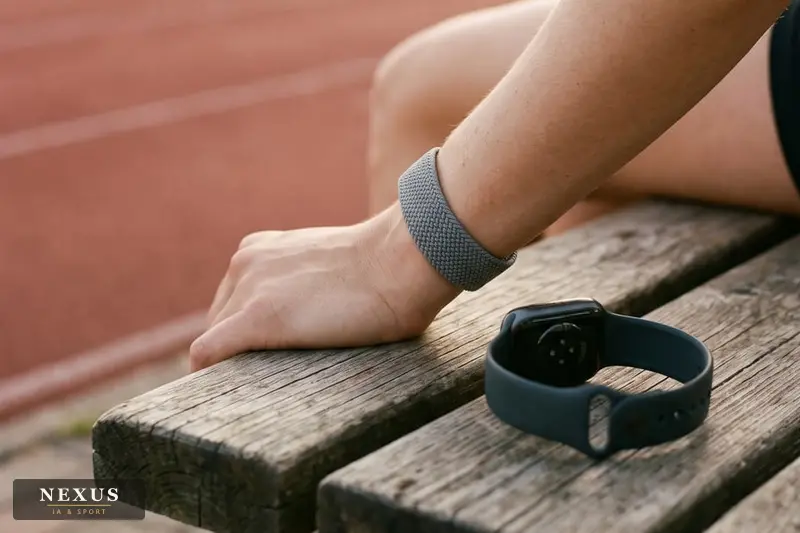
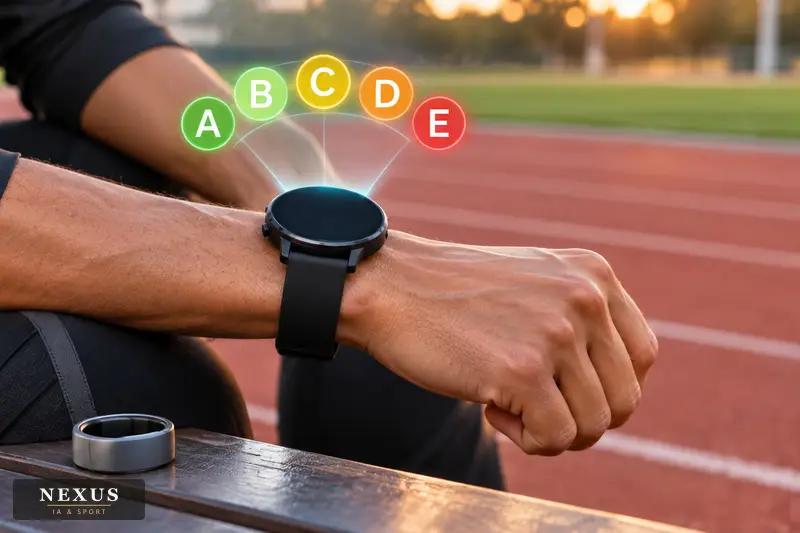
You wake up feeling fine, check your ring, and it tells you that you slept badly. Now you feel worse. Sleep is one of the most reliable performance boosters in sport, but the devices scoring it know less than their confident little numbers imply, especially about deep sleep.
Eleven basketball players and a very long lie-in
In 2011, Cheri Mah asked eleven Stanford basketball players to stay in bed for at least ten hours a night for five to seven weeks. Their 282-foot sprint, about 86 metres, fell from 16.2 to 15.5 seconds. Free throw and three-point shooting each improved by roughly 9 points.
Eleven players with no control group is a thin study. It has lasted because later work keeps pointing the same way: athletes who are short of sleep recover worse and decide more slowly.
What sleep experts told athletes in 2021
A group of specialists led by Neil Walsh reviewed the field in the British Journal of Sports Medicine. Plenty of athletes sleep badly, especially around competition and travel. The advice was unglamorous: screen for problems with simple questionnaires, then fix schedules and bedrooms before anyone reaches for a supplement.
On wearables they were careful. Total sleep time is generally about right. The split into light, deep and REM sleep is an estimate from movement and pulse, and it sits some way from what a lab test shows.
How a watch guesses your sleep stages
A sleep lab uses polysomnography. Electrodes record your brain activity, eye movements and muscle tone, and those three signals are what define sleep stages. Your ring has none of them.
It has wrist or finger movement, pulse and its variations, and sometimes skin temperature. From those clues an algorithm guesses what a full test would have shown. It is decent at telling when you are asleep. It is much worse when you are lying still and awake, which it often files as sleep. In 2021, a US team compared seven consumer devices with polysomnography in 34 young adults. All of them caught sleep at least 93% of the time. Wakefulness was recognised only 18 to 54% of the time, depending on the device, and results got worse on disrupted nights.
Where the data actually help
Patterns over time are where an algorithm earns its keep. If a player loses an hour after every evening match, or their night-time pulse stays high after long trips, staff can do something with that. A score of 62 out of 100 on a Tuesday morning tells them almost nothing.
Tracking can also backfire. Some people sleep worse because they are anxious about their score, and in 2017 sleep doctors gave it a name: orthosomnia. They were seeing patients who worried about their tracker’s numbers and trusted them more than proper tests. If your watch is making you worry, leave it on the bedside table.
The nights that do the damage
Bad nights in sport are not random. Nerves delay sleep before a big event. After an evening match, adrenaline, caffeine and stadium lights push bedtime back just when recovery should be starting.
Travel adds jet lag. A rough figure often quoted is one day to adjust per time zone crossed, and heading east tends to be harder. A few weeks of tracking can show a team which trips really wreck its sleep.
The routine that needs no gadget
The most effective habit is free: get up at the same time every day, weekends included. Your body clock sets itself mainly by wake-up time and morning light. A dark, cool, quiet room does most of the rest.
Watch the caffeine, because a late-afternoon coffee can still be working against you at bedtime. If you are short of sleep, a nap early in the afternoon helps without doing much harm to the following night.
How to read your numbers without losing sleep over them
Look at weekly averages, never a single night. One bad night before a match is normal and changes little about the next day. Weeks of sleep debt are what cost you.
Add context as well: a late dinner, a flight, a hard evening session. Without those notes the graph is just a line. With them, you have something worth showing a coach or doctor.
Why this matters most for teenagers
A 2014 study of teenage athletes by Matthew Milewski covered 112 school athletes. Those sleeping under eight hours a night were 1.7 times more likely to have been injured. That is an association rather than proof of cause, but it fits the wider picture.
Sleep is usually the first thing to go when school, training and matches pile up. Protecting it is prevention that any parent or coach can manage with no sensor at all.
Key takeaway
A sleep tracker is best at spotting short nights that keep happening. For everything else, regular hours and a dark room beat any app.
Frequently asked questions
How many hours should an athlete sleep?
There is no magic number. Recommendations for adults sit around 7 to 9 hours, and periods of heavy training often call for more.
Can I trust the deep sleep figure on my watch?
As a trend over several weeks, just about. As a measure of one particular night, no.
Are naps useful for athletes?
Yes, especially during heavy training or after a short night. About twenty minutes early in the afternoon is often enough to feel alert again.
What does the heart rate variability shown in the morning mean?
It describes the small variations between two heartbeats. A lasting drop against your usual level can signal fatigue, but a single value does not mean much.
Sources and method
This article draws on 5 sources, listed below. References checked in November 2026. Artificial intelligence tools help with research and writing: our method explains how. Found a mistake? Let us know and we will correct it and say so on the page. This article is for information and does not replace the advice of a doctor or sports professional who knows your situation.
- Mah et al. (2011), sleep extension in college basketball players (Sleep)
- Walsh et al. (2021), sleep and the athlete, expert recommendations (BJSM)
- Milewski et al. (2014), lack of sleep and injuries in adolescent athletes (Journal of Pediatric Orthopaedics)
- Baron et al. (2017), orthosomnia, when sleep tracking goes too far (Journal of Clinical Sleep Medicine)
- Chinoy et al. (2021), seven consumer devices compared with polysomnography (Sleep)