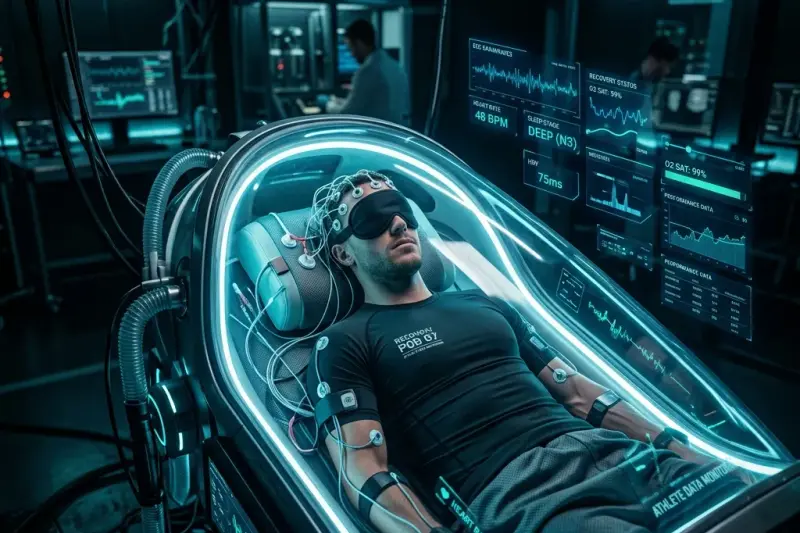
Show the ECG of a fit endurance athlete to someone unused to them and you may get a worried phone call. Hard training reshapes the heart, and it shows up on the trace. The real skill lies in separating those healthy changes from the rare problems that can kill, and that is exactly where an untrained algorithm can do harm.
What an athlete’s heart looks like
Regular endurance training slightly enlarges the heart and slows it at rest. A cyclist or distance runner with a pulse around forty is not unusual. That is an adaptation, not a disease.
On an ECG it can show up as a slow rhythm, a slight conduction delay between the atria and the ventricles, or certain forms of early repolarisation. International criteria treat these as normal in athletes. Other findings, such as inverted T waves in some leads, do need investigating.
The 2017 criteria that cut false alarms
That sorting comes from criteria published in 2017 by an international group of cardiologists led by Jonathan Drezner. They reduced false positives: healthy athletes wrongly sent for heavy testing, with the anxiety and sometimes the forced break from sport that follows.
European guidelines published in 2020, coordinated by Antonio Pelliccia, include an ECG in the check-up for competitive athletes and ask that it be read by a doctor trained in the athlete’s heart. That last part matters enormously. One trace can be routine in a pro cyclist and alarming in someone who never exercises.
Sudden death is rare, and the ECG is only part of the answer
An athlete collapsing always makes headlines, but it remains rare. In young people it is usually a disease of the heart muscle, such as hypertrophic cardiomyopathy, or a rhythm disorder. Over 35, the commonest cause is coronary artery disease.
That is why screening cannot rest on an ECG alone. Questions about symptoms and family history matter just as much, and a normal trace is no reason to ignore what your body is telling you.
Clever algorithms, wrong training data
Neural networks trained on millions of ECGs can do remarkable things. A Mayo Clinic team showed one could spot reduced pumping function on a standard trace, something the human eye cannot see.
The trap is that most models learned on hospital patients. A system that has never met an athlete’s heart may report the normal effects of training as disease, bringing back exactly the false alarms the 2017 criteria took years to reduce.
As a way of sorting traces and drawing a cardiologist’s attention, such a tool can save time. As the only thing deciding who may play, it is a real problem.
Countries do not agree on screening
Italy has required a medical with an ECG for competitive athletes since the 1980s, and its researchers have published data suggesting fewer sudden deaths among young athletes.
US recommendations rely mainly on history and physical examination, with routine ECGs seen as costly and prone to false positives. The argument continues, and the 2017 criteria were partly an attempt to take the sting out of those objections.
Symptoms you should never put down to tiredness
Chest pain during exercise, feeling faint or passing out, unusual palpitations, abnormal breathlessness: get any of these checked. A sudden unexplained death in the family before 50 is also a reason for a check-up.
Christian Eriksen’s collapse at Euro 2020, played in 2021, showed the other half of the problem. Immediate chest compressions and a nearby defibrillator save lives. At any club, knowing where the defibrillator is matters more than any algorithm.
What about the ECG on your watch?
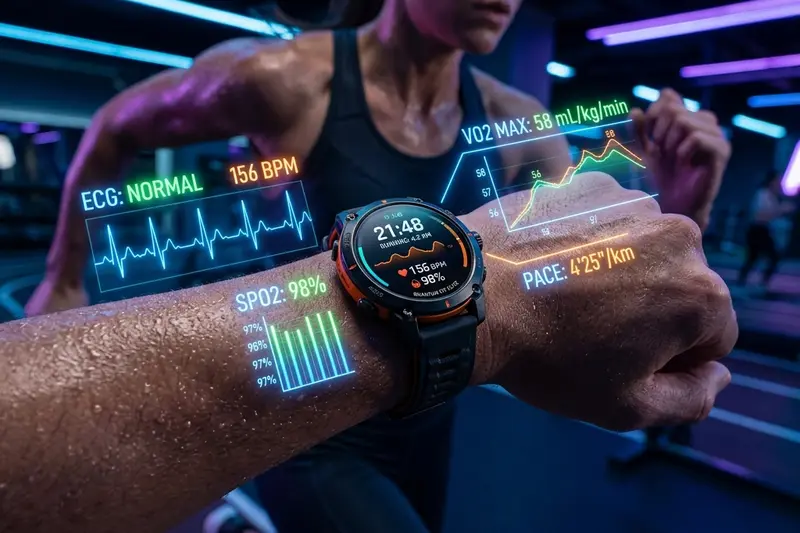
Many watches now take a single-lead ECG. That is handy for recording a bout of palpitations to show your doctor, but it does not replace a full twelve-lead test in a clinic.
If you are over 35 and returning to hard exercise, a check-up with a doctor is still your best move. The watch can sit alongside that. It cannot stand in for it.
Key takeaway
A well-read ECG protects athletes. A badly read one, by a human or a machine, can end a career that never needed ending.
Frequently asked questions
Does a normal ECG guarantee there is no risk?
No. It picks up many abnormalities, not all of them. Symptoms such as fainting or pain during exercise must always be reported.
Who should read an athlete’s ECG?
Ideally a doctor used to the criteria specific to athletes, and not just a piece of software.
What should I do if someone collapses on the pitch?
Call the emergency services, start chest compressions and get a defibrillator brought as quickly as possible. The device guides the user itself.
Is a very slow resting pulse a concern in an athlete?
Usually not, it is an effect of training. If it comes with fainting or unusual tiredness, talk to a doctor.
Should I have an ECG before returning to sport?
It is advisable after 35 when resuming intense activity, or if you have symptoms or a family history. The doctor decides which tests are useful.
Sources and method
This article draws on 3 sources, listed below. References checked in October 2026. Artificial intelligence tools help with research and writing: our method explains how. Found a mistake? Let us know and we will correct it and say so on the page. This article is for information and does not replace the advice of a doctor or sports professional who knows your situation.