Indiana Pacers guard Tyrese Haliburton said something on a podcast that the whole NBA has been talking about this week. He said he is sure some general managers ask ChatGPT which players to go after and which deals make financial sense. He finds that “scary to think about”. He named no one. So is this a player’s hunch or what really happens in front offices? We sorted out what is proven, what is suspicion, and what our own tests say about chatbots when you ask them about sport.
In brief
Haliburton suspects some NBA GMs consult ChatGPT about trades, without naming anyone. Teams like the 76ers do use AI to evaluate players, but with their own models. No trade decided by a chatbot has been proven.
What Haliburton said
The comments come from the Nothing Silent Podcast and were picked up from November 18 by several US outlets, including Heavy and EssentiallySports. According to their transcripts, Haliburton believes some GMs are probably asking ChatGPT two things: which players to target in a trade, and which contracts make sense financially. His reaction fits in one line: it is “scary to think about”.
He added a caveat straight away. For him, playing basketball is still “AI-proof”. What can change is everything around the court. He also said AI “doesn’t know everything” and is often wrong, especially when it has to read what statistics don’t show. In the same conversation he defended human commentators, saying the human element remains the most important part.
The key point is that he gave no example. No team, no executive, no anecdote. The articles that reported his words say so themselves: he was describing what he believes, not a verified case. His comment is best read as the instinct of someone who knows locker rooms very well, not as a revelation.
What is proven: AI is already in front offices
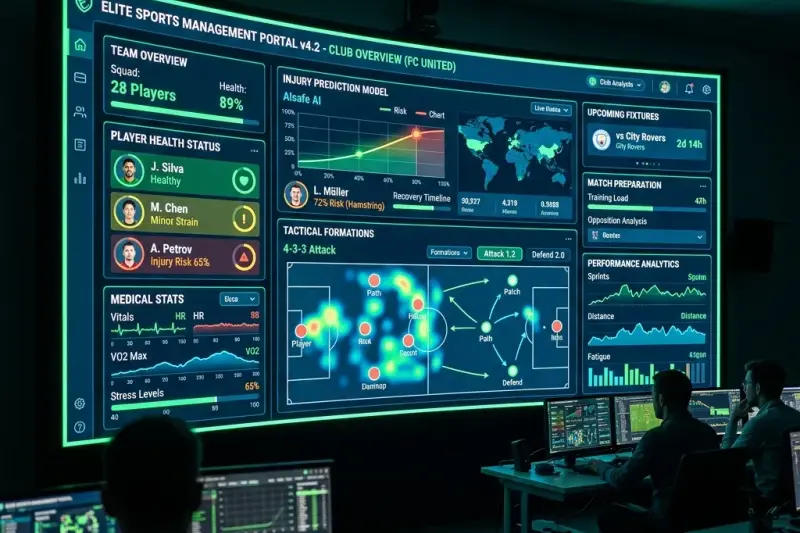
Haliburton is right about one thing. NBA teams already use artificial intelligence to evaluate players, and it is no secret. In March 2025, Philadelphia 76ers president Daryl Morey told the MIT Sloan conference that his team uses large language models trained on its own scouting reports and player tracking data. According to The Ringer, he said these models count as a vote in every decision, a bit like one more scout in the room.
The same article describes the Orlando Magic. The team used a platform that extracts player position data from ordinary TV footage, then a similar tool that also covers college, the G League and some overseas leagues. Assistant GM David Bencs says their predictions have become much more accurate.
Research is moving too. At Sloan in 2025, Australian data scientist Sean Farrell presented a model built with several co-authors, including Dean Oliver, one of the pioneers of advanced basketball stats. It read around 26,000 interview transcripts from more than 1,500 college players. From those words alone, it guessed who would make an NBA roster 63% of the time. Adding age, height and stats pushed that to 87%.
What isn’t: a GM who “asks ChatGPT”
There is a big difference between those tools and what Haliburton describes. The 76ers and the Magic use models fed with their own data, which nobody else has. A GM who opens ChatGPT and types “who should I trade my point guard for?” gets an answer built from whatever is on the internet, the same answer as everyone else.
An EssentiallySports article claims the Golden State Warriors used their own machine-learning model before the 2025 trade deadline, and that it flagged Jimmy Butler as a good fit. The piece cites no source for this. We mention it with caution: the team has not publicly confirmed it.
In short, teams using AI to support their scouts is documented. An executive deciding a trade on the word of a consumer chatbot is something nobody has shown.
Why a chatbot would make a poor GM
An NBA trade is not just comparing two players. You have to follow very complex salary cap rules, know players’ real physical condition, understand who gets along with whom in the locker room and what the agent wants. Much of that information is never public. A chatbot cannot know it, and it tends to make things up when it doesn’t know.
We have a fresh example. In our Predictor Match, we ask ChatGPT, Gemini and Claude every week for win probabilities on 19 football matches, and compare them with the Opta supercomputer and pure chance. In round one, ChatGPT scored 66.5 out of 100. Pure chance, which gives each outcome 33%, scored 66.7. Consumer AIs are not stupid, but they don’t see the future better than a statistical model, and not always better than a coin flip.
Dean Oliver, speaking to The Ringer, pointed to another risk. In his view, AI is very good at filling gaps between known things, and much weaker at thinking outside the box. If every team asks the same tool the same questions, they may all end up thinking alike. In a league where the edge comes from seeing what others miss, that is a real problem.
What it means for players
Haliburton’s comment hits a nerve. A player who learns he has been traded wants to believe a human weighed his value, his role and his family life. The idea that software may have suggested his departure feels hurtful, even if an executive still signs off in the end.
Players have already won safeguards on a related issue. In the NBA, data from sensors worn in practice is governed by the collective bargaining agreement, precisely so it can’t be used against them in contract talks. The use of AI in roster decisions is not covered by any public rule. If the debate Haliburton started grows, the players’ union may want a say too.
Our view
Haliburton is probably exaggerating when he pictures GMs copying ChatGPT’s advice. But he is pointing at a real question: how far should models be allowed to shape careers? The most advanced teams don’t ask a chatbot what to do, they build their own tools and treat them as one opinion among many. That is the right approach. An executive who settled a trade because an AI said yes would mostly be risking the same mistake as his rivals.
Frequently asked questions
What did Tyrese Haliburton say about AI?
On the Nothing Silent Podcast, he said he believes some NBA GMs ask ChatGPT which players to target and which trades make financial sense, and that he finds it scary. He named no team.
Do NBA teams really use AI?
Yes, to evaluate players. Daryl Morey said in 2025 that the 76ers use language models trained on their scouting reports, and the Magic say AI-derived tracking data improved their predictions.
Has a GM ever made a trade on ChatGPT’s advice?
Nothing public proves it. The known tools are in-house models fed with team data, not a consumer chatbot.
Sources and method
This article draws on 3 sources, listed below. References checked in November 2026. Artificial intelligence tools help with research and writing: our method explains how. Found a mistake? Let us know and we will correct it and say so on the page. This article is for information and does not replace the advice of a doctor or sports professional who knows your situation.
- Heavy via Yahoo Sports (November 25, 2026), Tyrese Haliburton raises alarming concern about NBA teams using AI for trades
- EssentiallySports via Yahoo Sports (November 18, 2026), “Scary to think about”: Tyrese Haliburton on NBA GMs relying on AI for trade moves
- The Ringer (June 24, 2025), DraftGPT: the brave new world of AI hits the NBA